

Cloud AI is rapidly changing the way businesses and individuals use artificial intelligence by combining advanced AI technologies with the flexibility of cloud computing. Instead of investing in expensive hardware and complex infrastructure, organizations can access powerful machine learning, data analytics, and intelligent automation tools through cloud-based platforms. This approach makes AI more affordable, scalable, and accessible for companies of all sizes. From improving customer experiences and streamlining business operations to supporting healthcare, finance, education, and manufacturing, cloud AI is driving digital transformation across industries. As technology continues to evolve, understanding Cloud AI, its benefits, applications, security, and future potential has become essential for staying competitive in today’s digital world.
What Is Cloud AI?
Cloud AI refers to artificial intelligence technologies that are hosted, managed, and delivered through cloud computing platforms instead of local computers or private servers. These services allow businesses to access sophisticated AI capabilities without purchasing costly hardware or hiring large teams to maintain AI infrastructure.
Cloud AI combines several technologies, including machine learning, deep learning, natural language processing (NLP), computer vision, and predictive analytics. Cloud providers handle infrastructure management, software updates, and security while users simply access AI tools through web interfaces or APIs. This approach significantly lowers the barrier to adopting artificial intelligence and enables organizations of every size to implement intelligent solutions quickly and efficiently.
How Cloud AI Works
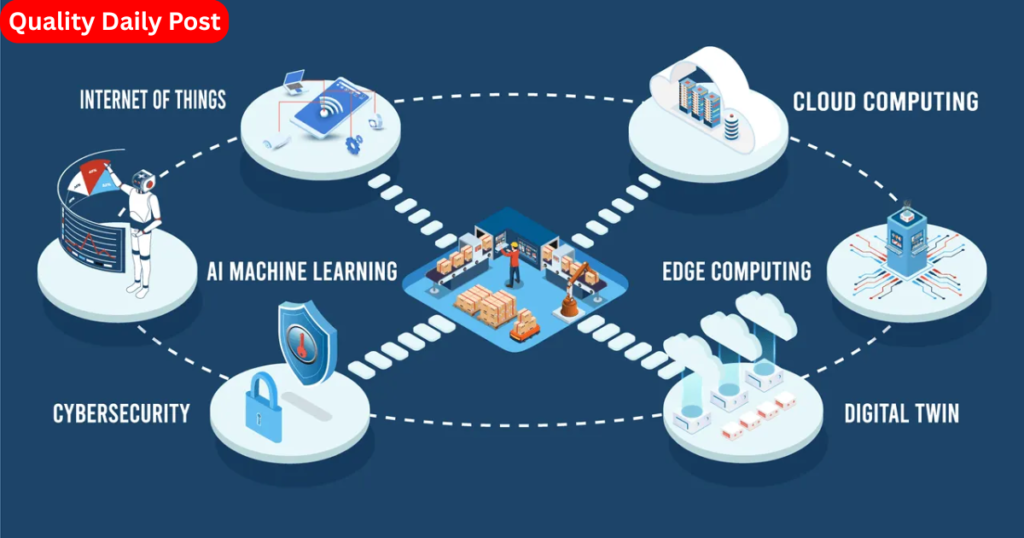
Cloud AI operates by processing data within powerful cloud data centers equipped with high-performance CPUs, GPUs, and specialized AI processors. Users upload data or connect existing databases to cloud platforms, where AI models analyze information, recognize patterns, and generate predictions or recommendations.
Most cloud AI platforms provide pre-trained models that can be customized using an organization’s own data. Developers can integrate these models into websites, mobile applications, or enterprise software through APIs, allowing AI-powered features to work seamlessly. Since computing resources are distributed across multiple servers, cloud AI can automatically scale according to workload, ensuring consistent performance even during periods of heavy demand while reducing infrastructure costs.
The Evolution of Cloud AI Technology
Artificial intelligence existed for decades before cloud computing made it widely accessible. Early AI systems required expensive supercomputers and specialized research environments, making adoption difficult for most organizations. The rise of cloud computing fundamentally changed this landscape.
As cloud infrastructure matured, leading technology companies began offering AI services over the internet. Improvements in GPU computing, big data analytics, and distributed processing accelerated AI development. Today, organizations can deploy advanced AI models within minutes using cloud platforms instead of spending months building infrastructure. This evolution has democratized artificial intelligence, enabling startups, educational institutions, healthcare providers, and global enterprises to leverage sophisticated AI capabilities regardless of their technical resources or budget.
Key Components of Cloud AI Platforms
Modern cloud AI ecosystems include multiple integrated services that work together to simplify AI development and deployment. These components provide flexibility for organizations with varying technical expertise and business goals.
Some of the most important cloud AI components include:
- Machine learning platforms for building and training models.
- Natural language processing services for text analysis and chatbots.
- Computer vision tools for image and video recognition.
- Speech recognition systems that convert voice into text.
- Predictive analytics for forecasting trends and customer behavior.
- AI APIs that integrate intelligence into applications.
- Data storage and management systems optimized for AI workloads.
Together, these services allow businesses to build intelligent applications while minimizing infrastructure complexity and operational costs.
Major Types of Cloud AI Services
Cloud AI services are available in different forms depending on business requirements and technical expertise. Understanding these service categories helps organizations choose the most suitable solution for their projects.
AI as a Service (AIaaS)
AI as a Service (AIaaS) delivers ready-to-use artificial intelligence capabilities through cloud platforms. Users simply access APIs for language translation, speech recognition, image analysis, recommendation engines, or chatbot development without building AI models from scratch. AIaaS is particularly valuable for startups and small businesses seeking affordable access to enterprise-grade artificial intelligence while minimizing development time and operational complexity.
Infrastructure for Cloud AI Deployment
Successful cloud AI depends on a powerful infrastructure capable of handling enormous computational workloads. Modern cloud providers operate globally distributed data centers equipped with advanced processors specifically designed for artificial intelligence.
High-speed networking, scalable storage, container orchestration, virtualization, and automated resource management work together to deliver reliable AI services. Many platforms also support hybrid and multi-cloud deployments, allowing organizations to combine private infrastructure with public cloud resources. This flexibility enables businesses to optimize performance, comply with regulatory requirements, and manage costs while maintaining high availability for mission-critical AI applications.
Benefits of Using Cloud AI
Cloud AI offers numerous advantages that make artificial intelligence more practical and cost-effective for organizations of every size. Businesses no longer need to invest heavily in physical infrastructure before experimenting with AI technologies.
Some major benefits include:
- Lower infrastructure costs
- Rapid deployment
- Automatic software updates
- Scalable computing resources
- Global accessibility
- High reliability
- Built-in security features
- Easy integration with existing applications
- Faster innovation
- Improved operational efficiency
These advantages allow organizations to focus on solving business problems rather than managing complex hardware environments.
Cloud AI vs Traditional AI
Choosing between Cloud AI and traditional on-premises AI depends on an organization’s goals, budget, security requirements, and scalability needs. Traditional AI systems require businesses to purchase expensive hardware, install software, and maintain servers internally. This approach offers greater control over infrastructure but demands significant investments in skilled personnel and ongoing maintenance. In contrast, Cloud AI provides flexible access to advanced AI capabilities through the internet, allowing organizations to pay only for the resources they use. Cloud-based solutions also simplify software updates, reduce deployment time, and support global collaboration, making them an attractive choice for companies pursuing rapid digital transformation and continuous innovation.
Popular Cloud AI Platforms
Several technology companies have developed powerful Cloud AI platforms that offer tools for machine learning, analytics, natural language processing, and computer vision. These platforms support developers, researchers, and enterprises with scalable infrastructure and extensive AI services. Businesses can build custom models, train algorithms, and deploy intelligent applications without investing in physical data centers. Many platforms also provide pre-trained AI models that accelerate development while maintaining high accuracy. Selecting the right platform depends on pricing, compatibility, compliance requirements, available AI services, and integration with existing business systems. Each provider continues expanding its AI ecosystem to meet the growing demand for intelligent cloud solutions.
Leading Cloud AI Providers
The global cloud AI market is dominated by several well-established providers that continue investing heavily in artificial intelligence innovation. Some of the most widely used platforms include:
- Google Cloud AI
- Microsoft Azure AI
- Amazon Web Services (AWS) AI
- IBM Watson
- Oracle Cloud AI
- Alibaba Cloud AI
- NVIDIA AI Cloud
Each platform offers unique strengths, pricing models, development tools, and specialized AI services. Organizations often evaluate performance, scalability, security, and industry-specific capabilities before selecting the most appropriate cloud AI provider for their business objectives.
Cloud AI in Business Operations
Modern businesses increasingly rely on Cloud AI to automate repetitive tasks, improve customer experiences, and make data-driven decisions. Artificial intelligence analyzes massive datasets much faster than humans, uncovering patterns that help organizations optimize operations and predict future trends. Companies use cloud AI to streamline workflows, monitor performance, personalize marketing campaigns, and improve customer support through intelligent chatbots and virtual assistants. Because cloud infrastructure scales automatically, businesses can quickly expand AI-powered services as demand grows without purchasing additional hardware. This flexibility enables organizations to innovate rapidly while maintaining operational efficiency and reducing overall technology costs.
Cloud AI in Healthcare
Healthcare has become one of the most impactful sectors benefiting from Cloud AI technologies. Hospitals, clinics, and research organizations use AI-powered cloud platforms to improve patient care, accelerate medical research, and enhance operational efficiency. AI algorithms analyze medical images, identify disease patterns, assist with diagnosis, and support treatment planning. Cloud infrastructure enables healthcare professionals to securely share medical data across multiple locations while maintaining accessibility for authorized users. Researchers also leverage cloud AI to process enormous genomic datasets, accelerating discoveries that contribute to personalized medicine and improved healthcare outcomes for patients worldwide.
Cloud AI in Finance
Financial institutions increasingly adopt Cloud AI to strengthen security, automate services, and improve decision-making. Banks use artificial intelligence to detect fraudulent transactions by identifying unusual customer behavior in real time. AI-powered algorithms also evaluate loan applications, analyze investment opportunities, forecast market trends, and automate customer service through virtual assistants. Cloud AI allows financial organizations to process millions of transactions efficiently while maintaining regulatory compliance and reducing infrastructure costs. As digital banking continues expanding, cloud-based AI solutions help institutions deliver faster, safer, and more personalized financial services to customers around the globe.
Cloud AI in Education
Educational institutions are using Cloud AI to create more engaging, personalized, and accessible learning experiences. Intelligent learning platforms analyze student performance and recommend customized study materials based on individual strengths and weaknesses. Teachers benefit from automated grading systems, attendance tracking, and AI-powered content creation tools that reduce administrative workloads. Cloud-based AI also supports virtual classrooms, language translation, accessibility features for students with disabilities, and predictive analytics that identify learners requiring additional academic support. These innovations help educators improve teaching effectiveness while giving students flexible learning opportunities regardless of their physical location.
Cloud AI in Manufacturing
Manufacturing companies leverage Cloud AI to increase productivity, improve quality control, and reduce operational downtime. AI systems continuously monitor production equipment using sensor data to predict maintenance needs before failures occur. This predictive maintenance minimizes costly disruptions and extends equipment lifespan. Computer vision technologies inspect products during manufacturing to identify defects with remarkable accuracy, reducing waste and improving customer satisfaction. Cloud AI also optimizes supply chain management, inventory forecasting, production scheduling, and energy consumption. By combining intelligent automation with scalable cloud infrastructure, manufacturers can improve efficiency while adapting quickly to changing market demands.
Cloud AI in Retail
Retail businesses use Cloud AI to enhance customer experiences, optimize inventory management, and improve sales performance. AI analyzes shopping behavior, purchase history, and customer preferences to deliver highly personalized product recommendations. Retailers also use predictive analytics to forecast demand, reducing inventory shortages and minimizing excess stock. Intelligent chatbots provide instant customer support, while computer vision technologies enable cashier-less shopping experiences and automated inventory monitoring. Cloud AI helps retailers respond quickly to market trends, improve operational efficiency, and strengthen customer loyalty through smarter, data-driven decision-making.
Cloud AI Security
Security is one of the most important considerations when implementing Cloud AI solutions. Since AI systems often process sensitive customer information, financial records, healthcare data, and proprietary business intelligence, protecting this information is essential. Leading cloud providers invest heavily in advanced security technologies such as end-to-end encryption, multi-factor authentication (MFA), identity and access management (IAM), continuous threat monitoring, and automated security updates. Businesses also share responsibility by configuring permissions correctly, monitoring user activity, and following cybersecurity best practices. A well-designed cloud AI environment helps organizations reduce security risks while maintaining the confidentiality, integrity, and availability of critical business data.
Privacy Challenges in Cloud AI
Although Cloud AI offers significant advantages, organizations must address privacy concerns when storing and processing data in cloud environments. Many AI applications rely on large datasets containing personal or confidential information, making compliance with privacy regulations increasingly important. Businesses should implement strong data governance policies, anonymize sensitive information whenever possible, and ensure that only authorized personnel have access to critical datasets. Transparent data collection practices also build customer trust by clearly explaining how information is gathered, processed, and stored. By balancing innovation with responsible data management, organizations can maximize the benefits of cloud AI while protecting user privacy.
Ethical Considerations of Cloud AI
As Cloud AI becomes more powerful, ethical concerns are receiving greater attention from governments, researchers, and technology companies. Artificial intelligence systems can unintentionally produce biased outcomes if they are trained on incomplete or unbalanced datasets. Organizations should regularly evaluate AI models for fairness, transparency, and accountability to reduce discrimination and improve decision-making accuracy. Human oversight remains essential, especially when AI influences healthcare, hiring, financial services, or legal decisions. Responsible AI development also includes explaining how automated decisions are made, protecting user rights, and ensuring that artificial intelligence benefits society while minimizing unintended consequences and harmful biases.
Cloud AI and Machine Learning
Machine learning serves as the foundation of most Cloud AI applications. Machine learning algorithms learn from historical data, identify patterns, and improve their predictions without requiring explicit programming for every scenario. Cloud platforms provide scalable computing power that allows developers to train complex models much faster than traditional systems. Organizations can experiment with multiple algorithms, evaluate model performance, and deploy updated versions automatically through cloud services. Continuous learning enables AI systems to become more accurate over time as additional data becomes available, making machine learning one of the most valuable technologies driving cloud AI innovation across numerous industries.
Cloud AI for Small Businesses
Small businesses no longer need massive technology budgets to benefit from artificial intelligence. Cloud AI provides affordable subscription-based services that eliminate the need for expensive servers and specialized hardware. Entrepreneurs can use AI-powered customer support, automated marketing tools, predictive sales forecasting, inventory management, and business analytics without hiring large technical teams. Because cloud services scale according to usage, smaller companies only pay for the computing resources they actually consume. This cost-effective approach enables startups and growing businesses to compete with larger organizations by improving operational efficiency, enhancing customer experiences, and making smarter business decisions through accessible AI technology.
Cloud AI Development Tools
Developers have access to a wide range of Cloud AI tools that simplify the creation, testing, and deployment of intelligent applications. Modern cloud platforms provide integrated development environments, automated machine learning services, data labeling tools, model training pipelines, and monitoring dashboards. Many services include low-code or no-code interfaces that allow users with limited programming experience to build AI-powered solutions. Developers can also use APIs for speech recognition, language translation, computer vision, and recommendation engines without building complex algorithms from scratch. These comprehensive development ecosystems accelerate innovation while reducing technical complexity and project development time.
Best Practices for Implementing Cloud AI
Successfully adopting Cloud AI requires careful planning, realistic goals, and ongoing optimization. Organizations should begin by identifying business problems where artificial intelligence can provide measurable value instead of implementing AI simply because it is popular. High-quality data is equally important, since accurate AI models depend on reliable and well-organized information. Businesses should also establish governance policies, train employees, monitor AI performance regularly, and maintain strong cybersecurity measures. Starting with small pilot projects allows organizations to evaluate results, refine strategies, and gradually expand AI adoption across multiple departments while minimizing operational risks and implementation costs.
Common Mistakes to Avoid
Many organizations encounter challenges because they underestimate the complexity of implementing Cloud AI. Avoiding common mistakes significantly improves the chances of a successful deployment.
Some frequent mistakes include:
- Using poor-quality or incomplete datasets.
- Ignoring data privacy and security requirements.
- Setting unrealistic expectations for AI performance.
- Failing to train employees on new AI tools.
- Neglecting continuous monitoring and model updates.
- Overlooking integration with existing business systems.
- Choosing cloud services without evaluating long-term scalability.
By recognizing these issues early, businesses can build more reliable AI solutions and achieve stronger long-term results.
The Future of Cloud AI
The future of Cloud AI looks exceptionally promising as artificial intelligence continues evolving alongside cloud computing technologies. Organizations are increasingly moving from traditional software toward AI-powered platforms capable of making intelligent decisions, automating complex workflows, and delivering personalized user experiences. Improvements in computing power, high-speed networking, and specialized AI processors will enable cloud platforms to handle even larger datasets with greater efficiency. Businesses will continue integrating AI into everyday operations, while governments, educational institutions, and healthcare providers expand adoption for public services. As innovation accelerates, cloud AI is expected to become a standard component of modern digital infrastructure rather than a specialized technology.
Emerging Trends in Cloud AI
Several emerging trends are shaping the next generation of Cloud AI solutions. Generative AI, edge AI, multimodal AI, autonomous agents, and AI-powered cybersecurity are transforming how organizations build intelligent applications. Cloud providers are also investing heavily in automated machine learning (AutoML), allowing users with minimal technical expertise to create sophisticated AI models. Another significant trend is the integration of AI with the Internet of Things (IoT), enabling connected devices to analyze information and respond in real time. Sustainability is becoming increasingly important as cloud providers optimize data centers to reduce energy consumption while supporting growing AI workloads.
Cloud AI and Generative AI
One of the biggest developments in recent years is the rise of Generative AI, which has significantly expanded the capabilities of Cloud AI platforms. Unlike traditional AI systems that focus mainly on classification and prediction, generative AI can create original content such as text, images, videos, computer code, music, and business reports. Cloud infrastructure provides the enormous computational resources required to train and operate these advanced foundation models. Businesses now use generative AI for content creation, software development, customer support, product design, marketing campaigns, and knowledge management. As these models continue improving, organizations will gain access to even more intelligent and creative cloud-based AI services.
Challenges That Cloud AI Must Overcome
Despite its rapid growth, Cloud AI still faces several technical, ethical, and operational challenges. Data privacy regulations continue evolving across different countries, requiring organizations to manage information responsibly while remaining compliant. AI models also require enormous computing resources, leading to higher energy consumption and operational costs. Another challenge involves maintaining transparency, since complex AI systems can sometimes make decisions that are difficult to explain. Organizations must also address cybersecurity threats, vendor dependency, integration complexity, and workforce skill gaps. Successfully overcoming these challenges will require continuous innovation, responsible governance, and collaboration between technology providers, businesses, and policymakers.
Industry Outlook and Market Growth
The global Cloud AI market is expected to experience remarkable expansion over the coming years as businesses accelerate digital transformation initiatives. Organizations across healthcare, finance, education, manufacturing, retail, transportation, agriculture, and government continue investing in AI-powered cloud solutions to improve productivity and gain competitive advantages. Increasing demand for automation, real-time analytics, personalized customer experiences, and intelligent decision-making will continue driving market growth. Cloud providers are also expanding regional data centers, introducing specialized AI hardware, and developing industry-specific solutions. These investments indicate that cloud AI will remain one of the fastest-growing segments within the global technology industry for the foreseeable future.
Conclusion
Cloud AI has fundamentally changed how organizations access and use artificial intelligence by making advanced computing resources available through scalable cloud platforms. From small startups to multinational enterprises, businesses can now deploy machine learning, natural language processing, computer vision, predictive analytics, and generative AI without investing in costly infrastructure. While challenges such as privacy, security, ethics, and regulatory compliance remain important, the overall advantages of cloud AI far outweigh its limitations when implemented responsibly. As technology continues evolving, cloud AI will play an increasingly central role in innovation, automation, and digital transformation, helping organizations solve complex problems, improve customer experiences, and create smarter, more efficient operations across virtually every industry.
Frequently Asked Questions (FAQs)
1. What is Cloud AI?
Cloud AI is the delivery of artificial intelligence services through cloud computing platforms, allowing users to access machine learning, natural language processing, computer vision, and other AI technologies without maintaining their own infrastructure.
2. What are the main benefits of Cloud AI?
The primary benefits include scalability, cost savings, rapid deployment, automatic updates, improved collaboration, enhanced security features, and access to powerful AI tools on demand.
3. Is Cloud AI secure?
Yes, most leading cloud providers implement advanced security measures such as data encryption, identity management, access controls, and continuous monitoring. However, organizations must also follow security best practices to protect their data.
4. Which industries use Cloud AI?
Cloud AI is widely used in healthcare, finance, education, retail, manufacturing, logistics, agriculture, government, and many other sectors.
5. What is the difference between Cloud AI and traditional AI?
Traditional AI typically runs on local infrastructure managed by the organization, while Cloud AI delivers AI services through internet-based cloud platforms that offer greater scalability, flexibility, and lower infrastructure costs.
6. What is the future of Cloud AI?
The future of Cloud AI includes wider adoption of generative AI, edge AI, AutoML, intelligent automation, and industry-specific AI solutions, making artificial intelligence more accessible and powerful for businesses of all sizes.

